
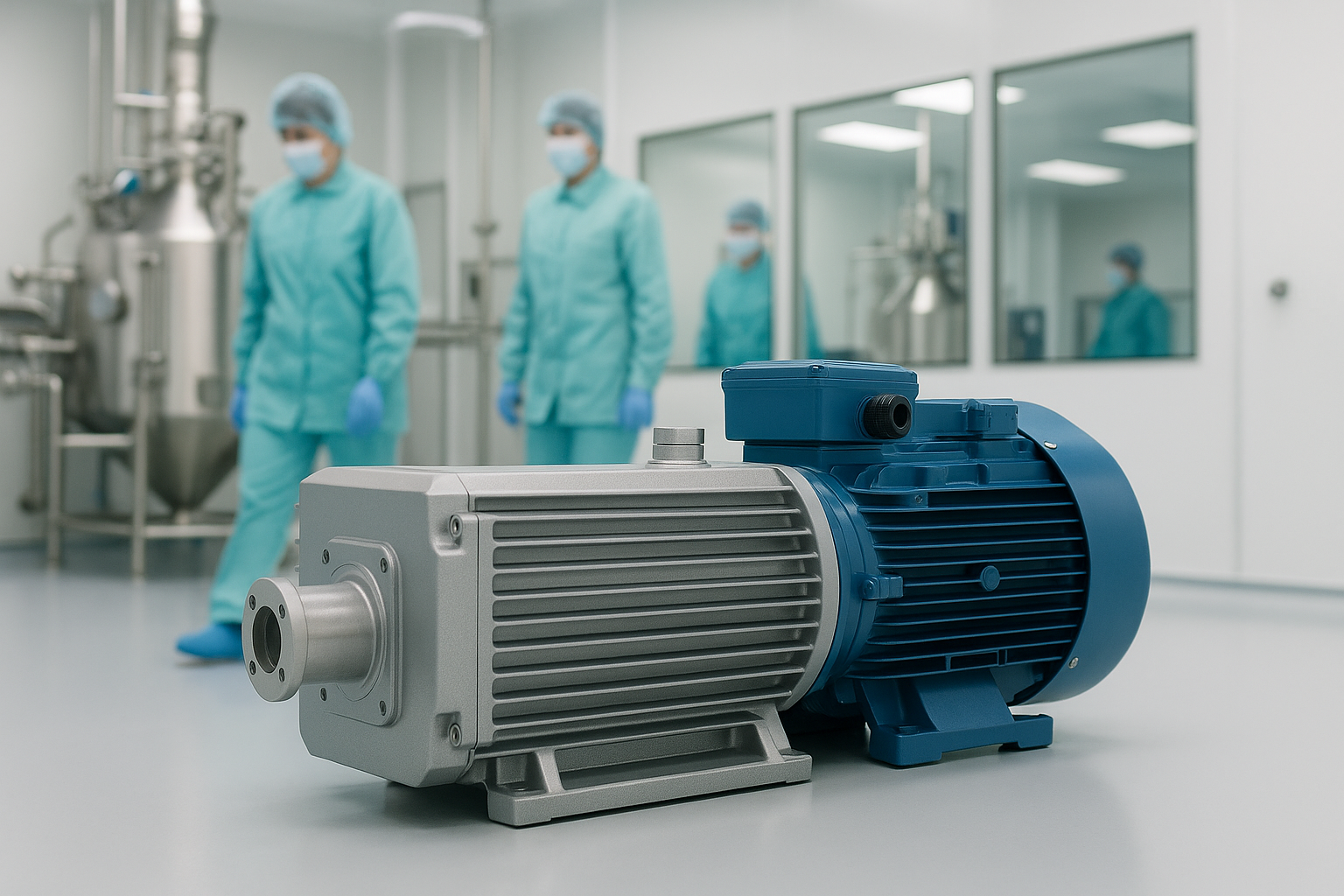
In the pharmaceutical industry, precision is not a luxury – it is an absolute necessity. Every process must meet strict quality standards, and reliability is essential to ensure safety, effectiveness and hygiene. In this force field, vacuum pumps play a silent but crucial role. They are used in applications as diverse as drying, filtration, packaging, distillation and sterilization. But why are vacuum pumps so important in the pharmaceutical industry, and what role do they play in achieving efficient, safe and sustainable production processes?
In this blog, we dive deeper into the world of vacuum pumps for pharmaceutical applications. We cover their impact on efficiency, hygiene, GMP compliance and sustainability. We also discuss recent innovations and answer questions such as: How do vacuum pumps increase efficiency in the pharmaceutical industry? and What are the benefits of vacuum pumps in pharmaceutical packaging and sterilization processes?
Why are vacuum pumps needed in the pharmaceutical industry?
Vacuum pumps are indispensable in almost every phase of pharmaceutical production. Consider applications such as:
- Vacuum filtration: For separating solids from liquids.
- Freeze-drying (lyophilization): A process used to preserve sensitive drugs.
- Sterile packaging: where vacuum technology helps to package products safely and airtight.
- Distillation and evaporation: For purification processes of active ingredients.
- Reactors and fermentation: Where vacuum optimizes reaction conditions.
In all these processes, vacuum pumps provide controlled, reliable conditions that increase product quality and reduce waste. Without these technologies, large-scale and compliant production would simply not be possible.
Efficiency in production
How do vacuum pumps increase efficiency in the pharmaceutical industry?
Efficiency vacuum pumps play a key role in the optimization of pharmaceutical processes. Faster drying times, improved filtration and energy-efficient operation all contribute to higher output at lower cost.
Vacuum pump pharmaceutical production: speed and reliability
Modern vacuum pumps are designed to perform continuously with minimal interruption. This increases plant uptime and reduces production losses. Especially in batch production, where every minute counts, energy-efficient vacuum pumps make the difference.
Energy efficiency and smart control
Frequency-controlled motors and intelligent PLC controls allow pumps to automatically adjust to the process demand. This reduces energy consumption and prevents unnecessary wear. This creates innovative vacuum pumps for energy efficiency in pharmaceutical plants.
Safety and hygiene
Vacuum pumps for sterile and safe pharmaceutical production processes
Hygiene and product safety are absolute priorities. In environments where even microscopic contamination can affect the end user, safety vacuum pumps and hygienic design are essential.
GMP standards pharmaceutical industry
All equipment used must comply with Good Manufacturing Practices ( GMP) standards. Vacuum pumps for this sector therefore often feature:
- Closed systems that prevent product residue from contacting pump mechanics.
- Materials such as stainless steel that are corrosion resistant and easy to clean.
- Oil-free technologies that minimize contamination risks.
These features make vacuum pumps suitable for hygienic pharmaceutical production where validation and traceability are key.
Sustainability
Durable vacuum pumps for pharmaceutical production
In addition to efficiency and safety, sustainability is becoming increasingly important. Durable vacuum pumps use less energy, are quieter to operate and require less maintenance – all benefits for both the environment and operational costs.
Energy-efficient vacuum pumps: technology in development
There is a clear trend toward oil-free, dry vacuum pumps that generate no residuals and are significantly more economical to operate. Recovery of waste heat from vacuum systems is also becoming more common.
Legislation and standards
Vacuum pumps and GMP compliance in the pharmaceutical sector
In the pharmaceutical industry, strict regulations apply to product safety, traceability and cleanability. Vacuum equipment must therefore:
- Be validated to international standards (GMP, FDA, ISO).
- Contain documentation and serial numbers for audits and quality control purposes.
- Comply with ATEX guidelines when used in explosion-prone areas.
Suppliers of vacuum pumps must therefore provide not only technical expertise, but also support for validation, documentation and regulatory compliance.
Maintenance and reliability
Vacuum pump maintenance pharmaceutical industry: prevention is better than cure
Regular maintenance is essential to ensure continuity. A faulty vacuum pump can shut down entire production lines. That’s why many pharmaceutical companies choose predictive maintenance, which uses sensors and data logging to detect potential failures early.
There are also special maintenance kits that allow preventive replacement of parts such as seals, filters and oil systems. This contributes to reliability and GMP compliance.
Conclusion
The use of vacuum pumps in the pharmaceutical industry is not only a technical choice, but also a strategic one. They improve the efficiency of production processes, ensure safety and hygiene, support GMP compliance and contribute to sustainable production. Whether vacuum pumps for sterile and safe pharmaceutical production processes or innovative vacuum pumps for energy efficiency in pharmaceutical plants – the right choice makes a world of difference.
At DOVAC, we understand these complex requirements. We provide not only vacuum pumps, but complete solutions for the pharmaceutical industry – from consulting and design to installation and maintenance. This is how we ensure that you not only meet the requirements today, but are also ready for the future.


