
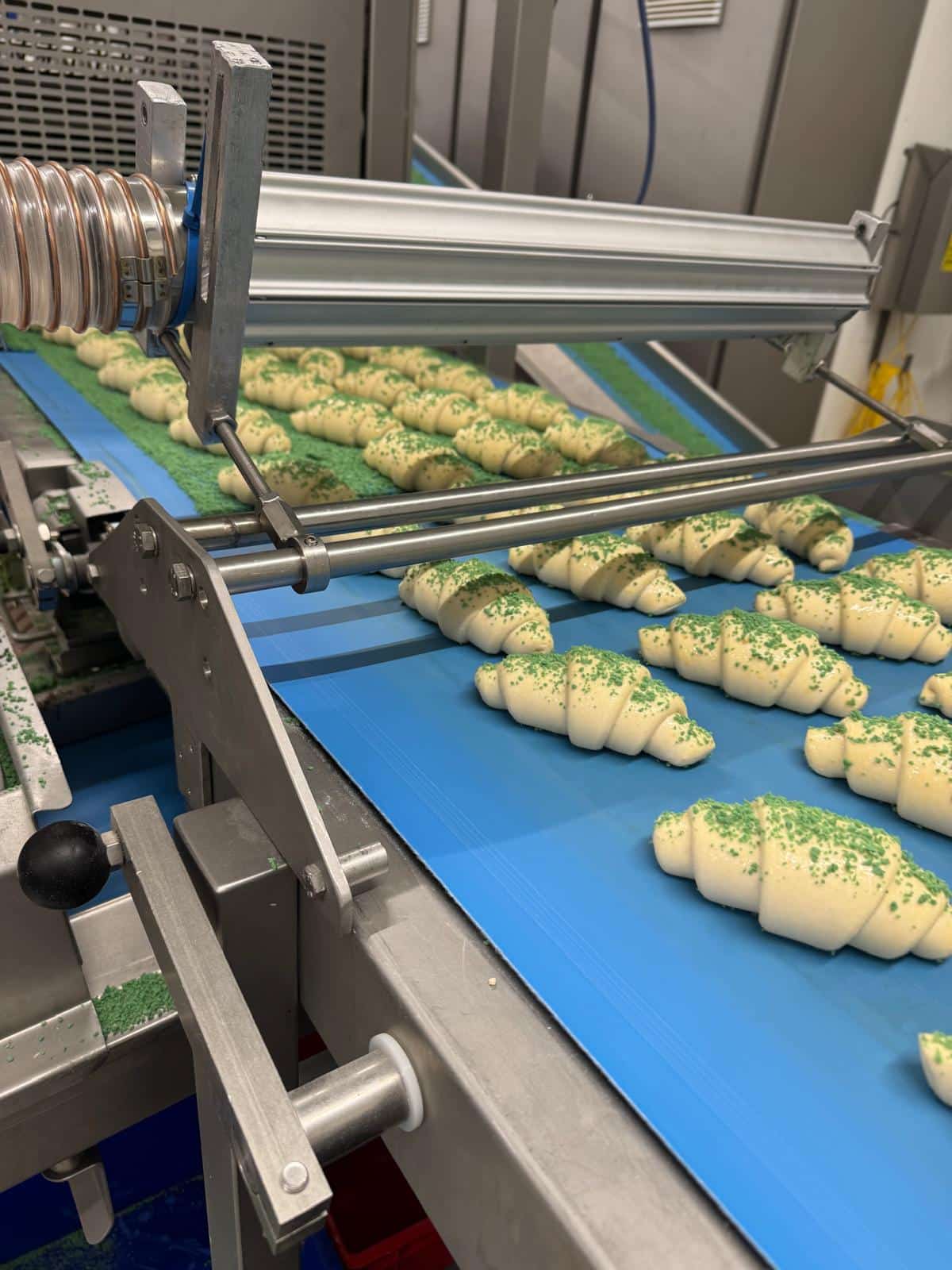
Drying may seem like a simple step in an industrial process, but in reality it often determines the speed, quality and energy efficiency of an entire production line. Whether blowing off water, dust or emulsion, a good drying solution prevents disruptions, increases output and reduces costs.
Many companies still rely on traditional drying methods such as compressed air guns, nozzles or even mechanical systems such as cloth rollers and brushes. These techniques work, but they are often energy-consuming, maintenance-intensive and difficult to control.
Therefore, more and more manufacturing companies are switching to air knives. In this blog, we explain what air knives are, where they are applied, and how they compare to traditional drying methods. We zoom in on efficient drying, compressed air savings, maintenance benefits and the ROI of airknife technology.
What are air knives?
An air knife is a specially designed linear profile into which a powerful, even airflow is blown through a narrow slit. This airflow literally sweeps liquids, dirt or particles from the surface of products.
Unlike systems powered by compressed air, air knives are usually fed by a side channel fan or centrifugal blower. This combination provides energy-efficient, continuous airflow with high air velocity but relatively low consumption.
Common applications of air knives
Air knives are widely used in numerous industries:
1. Food industry
- Drying of bottles, jars and cans before labeling
- Removal of moisture from packages after refrigeration or pasteurization
- Blowing off crumbs or dust particles from baked goods
2. Packaging industry
- Drying of films, bags or trays before sealing
- Removal of dust or static charge from packaging material
- Blowing off cutting residues after punching or cutting
3. Metal and glass processing
- Blowing off chips or coolant after machining
- Drying of glass plates after cleaning
- Removal of corrosion protection oil for further processing
4. Printing and paper handling
- Separation of sheets with air flow
- Removal of dust particles or paper fibers
- Drying of inks or coatings with cold air
5. Automotive and assembly lines
- Drying of plastic parts after cleaning
- Removal of dust from body parts
- Clean blowing of electronic components
6. Electronics and cleanroom applications
- Non-contact blow-off of dust particles without static buildup
- Drying sensitive components without heat exposure
The common denominator: where non-contact, powerful and controlled drying is required, an air knife offers a robust solution.
Traditional drying methods: overview and limitations
Before we dive deeper into the equation, a brief review of what we mean by traditional drying techniques:
Compressed air nozzles or guns
These are used manually or automatically to blow off products. They operate on compressed air from a compressor system.
Mechanical systems
Consider cloth rollers, brushes or rollers that physically remove moisture from a surface.
Drying tunnels
Combinations of hot air and ventilation over a long transport section to dry products gradually.
While effective in some situations, there are definite drawbacks:
- High energy costs, especially with compressed air
- Many moving parts, so more wear and maintenance
- Poor control of air distribution
- Longer drying times or incomplete drying for complex shapes
Air knife comparison: efficiency and energy savings
Now let us specifically compare the properties of air knives with traditional drying methods.
1. Compressed air savings
One of the biggest wins: air knives save up to 70-90% in compressed air consumption. Generating compressed air is expensive – it takes 7-8 times more energy than air through a blower.
2. Efficient drying
An air knife delivers a wide, even air profile at a constant speed. As a result, products are blown dry in one motion, where nozzles require multiple positions and settings.
3. Lower maintenance costs
With no moving parts or wear-sensitive contact points, an air knife requires minimal maintenance. No filters, no wear parts, no brush replacement.
4. Safety and noise level
Blowers operate at lower pressure and without heat, which is safer for personnel. In addition, blowers are typically quieter than compressors.
The ROI of air sampling technology
An air knife system requires a one-time investment in a blower, air knife and connection equipment. But the operational benefit is great:
- Faster drying times = higher throughput
- Lower energy costs = immediately measurable savings
- Fewer outages = higher uptime
- Less compressed air system load = longer compressor life
Case study
A packaging company uses 6 compressed air nozzles for drying bottles. After switching to 2 air nozzles with a side channel blower, energy costs decrease by € 3,800 per year. The initial investment of € 3,200 is recovered within 10 months.
The ROI of air knife technology is demonstrable and sustainable.
Water and energy conservation with air knives
Modern production is all about sustainability. Water and energy conservation are no longer nice-to-have’s, but prerequisites. Air knives help in both areas:
- Water savings: faster drying means less rinsing or post-treatment
- Energy savings: no waste via compressors or heat recovery required
- Efficient use of air: air is used only where needed, not around it
In many cases, switching to air knives leads to a lower carbon footprint as well as more efficient production.
Frequently asked questions about air knives
Are air knives suitable for complex shapes?
Yes, air knives can be placed in curves, U-shapes or even around a product. Round or adjustable air knives are available for cylindrical objects.
What is the lifespan of an air knife?
When used correctly and fed through a blower, the life of an air knife is trouble-free for years, with only occasional visual inspection.
Is it possible to connect multiple air knives to one blower?
Sure. Depending on capacity, multiple air knives can be fed simultaneously. This reduces the investment per production line.
Conclusion: air knives are the smart successor to traditional drying technology
Where once compressed air and mechanical drying methods were the standard, today air knives offer a more efficient, sustainable and cost-effective alternative. By providing targeted drying without heat or excessive energy consumption, air knives improve product quality and reduce operating costs.
The benefits at a glance:
- Up to 90% compressed air savings
- Shorter drying times
- Less maintenance and breakdowns
- Fast payback time
- Saving water and energy without sacrificing results
Also curious if air knives can improve your process? Contact us for a no-obligation analysis or discover here our offer.


